


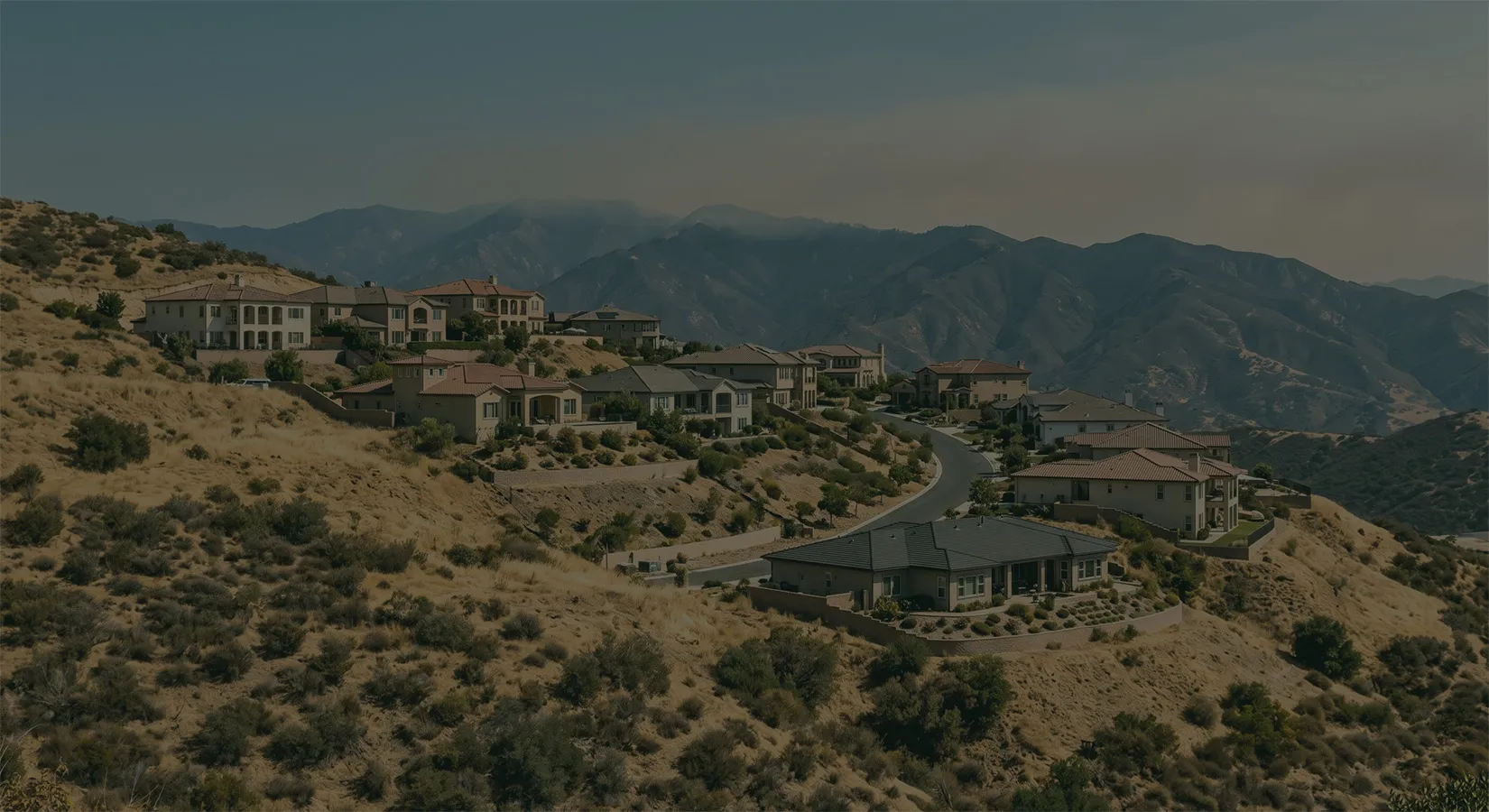
If you’re buying a home in much of California, there’s a three-digit number you may never see — but it can decide whether you can insure the house, and how much you’ll pay. It’s the property’s wildfire risk score.
Plenty of deals run into trouble not because of the home itself, but because the buyer couldn’t line up affordable insurance once a wildfire score came into play. Knowing how these scores work puts you ahead of that surprise.
What a wildfire risk score actually is
A wildfire risk score is an insurer’s estimate of how likely a specific property is to be damaged by fire. Most insurers don’t calculate it themselves — they buy it from modeling companies (the best known is Verisk’s FireLine) and feed that score into their decision to cover you and what to charge.
The score usually lands on a scale or in tiers like Low, Moderate, High, and Extreme. Above a certain line, an insurer may charge much more, require specific fire-prevention work, or decline the home entirely.
Three things drive almost every model:
- Fuel — the vegetation around the home. Dense brush and trees close to the house raise the score; cleared, irrigated space lowers it.
- Slope — fire moves faster uphill, so a home on a steep grade scores worse than the same home on flat ground.
- Access — narrow, single-exit roads are harder to defend and evacuate, which models penalize.
Notice what’s not on that list: the home’s price or how nicely it’s renovated. A beautiful listing can still carry a high score because of the hillside behind it.
Why this can surprise you late in the process
The risky moment is usually after your offer is accepted, when your lender requires proof of insurance and you go shopping for a policy for the first time. If the home’s score sits above a carrier’s threshold, you can suddenly find few standard options just days before closing.
That’s exactly why the smartest move is to check early.
How to check before you make an offer
You can’t see the exact score a carrier will use, but you can get close enough to spot trouble:
-
Look up the public risk view. Free tools like the First Street “Risk Factor” (built into many Realtor.com listings) and California’s wildfire hazard maps give you a directional read.
-
Ask the seller what they currently pay — and with which insurer. That tells you how the market treats this specific home right now.
-
Get a real quote early. Before you remove contingencies, get an actual quote on the property. A licensed agent can often check a couple of carriers’ appetite in a day.
-
Know the backstop. California’s FAIR Plan exists for homes the standard market won’t cover. It’s more expensive and more limited, but it keeps a purchase possible when nothing else will write the policy.
What you can do about a high score
A high score doesn’t mean the home is unsafe or unbuyable — it means insurance takes planning and may cost more. Fire-prevention work genuinely helps: clearing defensible space, replacing a wood-shake roof, installing ember-resistant vents, and boxing in eaves are the kinds of upgrades some insurers reward. If the seller has done this work and kept receipts, that’s real ammunition for your insurance agent.
The takeaway
Treat the wildfire score like you’d treat a home inspection: check it before you make an offer, talk to an insurance agent early, and you’ll never be the buyer learning about it during closing week.
Ready to see your options? You can get a quote in minutes through our licensed California partner.